GeotchaA geography quiz on a real globe
7 largest lakes in Chile
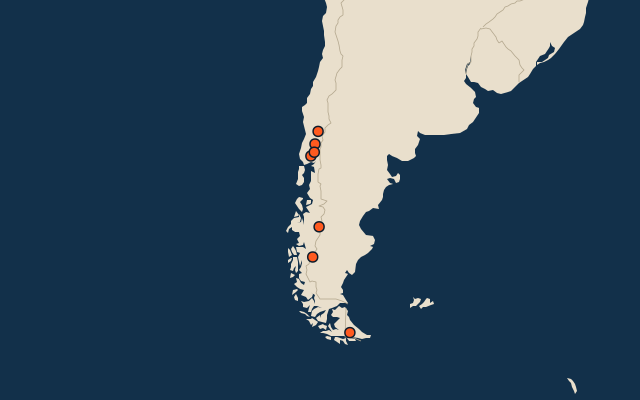
7 lakes, each one drawn on a satellite globe. Name it when it lights up, find it when you are given its name, or type every one you can remember in Name all.
Free to start: a few quizzes a day cost nothing, and Geotcha Plus opens every quiz. What you miss comes back for review until it sticks.
The full list
About this quiz
General Carrera Lake is the largest of the 7 lakes in this quiz, at 1,850 km²; Lake Villarrica is the smallest listed, at 176 km². General Carrera Lake's area is 1.7 times O'Higgins/San Martín Lake's (1,058 km²). The three largest hold 72% of the combined area of all 7.
What they are known for
- General Carrera Lake: Has a different name on each side of the border; famous for its Marble Caves.
- O'Higgins/San Martín Lake: Glacial lake split between Chilean and Argentine Patagonia
- Llanquihue Lake: Chilean lake under the Osorno volcano, settled by Germans
- Ranco Lake: Chilean lake in the Los Ríos region
The lakes
- 1General Carrera Lake Chile1,850 km²
- 2O'Higgins/San Martín Lake Chile1,058 km²
- 3Llanquihue Lake Chile860 km²
- 4Lake Fagnano Argentina590 km²
- 5Ranco Lake Chile442 km²
- 6Rupanco Lake Chile223 km²
- 7Lake Villarrica Chile176 km²
On the map
All of South America
- 25 largest lakes in South America
- Lakes in South America among the world’s 100 largest
- 10 largest reservoirs in South America
More in Chile
- 25 largest cities in Chile
- Regions of Chile
- 25 longest rivers in Chile
- 25 highest peaks in Chile
- 25 largest islands in Chile
- 6 best known World Heritage Sites in Chile
- Flags of the regions of Chile
- 10 largest cities in Chile
- 10 most populous regions of Chile
- 18 best known wine regions in Chile
Other countries of South America
The whole world
How the figures are measured
Lakes by surface area in km². The Caspian Sea counts as a lake. Coastal lagoons do not, and a salt pan that is dry most years (Lake Eyre) is not ranked by size. A lake belongs to every country on its shores. Natural lakes only: reservoirs held back by a dam are left out.