GeotchaA geography quiz on a real globe
10 largest cities in Gyeongsangnam-do
10 cities, each one drawn on a satellite globe. Name it when it lights up, find it when you are given its name, or type every one you can remember in Name all.
Free to start: a few quizzes a day cost nothing, and Geotcha Plus opens every quiz. What you miss comes back for review until it sticks.
The full list
About this quiz
Changwon is the largest of the 10 cities in this quiz, at 1 M; Kyosai is the smallest listed, at 72 k. Changwon's population is 3.4 times Yangsan's (298 k). The three largest hold 71% of the combined population of all 10.
The cities
- 1Changwon1 M
- 2Yangsan298 k
- 3Geoje229 k
- 4Tongyeong116 k
- 5Sacheon108 k
- 6Miryang98 k
- 7Ungsang83 k
- 8Naeso81 k
- 9Changnyeong75 k
- 10Kyosai72 k
On the map
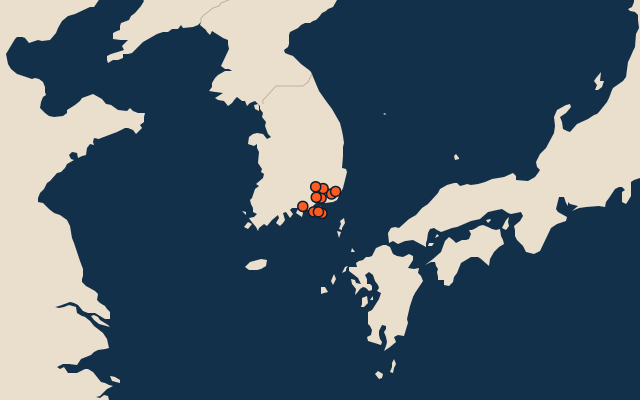
All of South Korea
More in Gyeongsangnam-do
Elsewhere in South Korea
- 10 largest cities in Jeollabuk-do
- 8 largest cities in North Chungcheong
- 10 largest cities in Gangwon-do
- 10 largest cities in Gyeonggi-do
- 10 largest cities in Gyeongsangbuk-do
- 10 largest cities in Chungcheongnam-do
South Korea, by kind
- Provinces of South Korea
- 9 longest rivers in South Korea
- 20 highest peaks in South Korea
- 25 largest islands in South Korea
The whole world
How the figures are measured
Population of the metro area: the city and the places continuously built up around it, as Thomas Brinkhoff’s Major Agglomerations of the World (citypopulation.de) counts them from censuses projected to 1 January 2026, the list most rankings use. It covers every agglomeration of 1 million or more; below that, a city ranks by its urban centre in the United Nations’ World Urbanization Prospects 2025 at 1 January 2026 (every city of 300,000 or more and every capital, counted by the Degree of Urbanisation on a 1 km grid), and a smaller city by its city-proper figure. Each source agglomeration is counted once: its main city and named core cities are accepted answers for the same entry. The included core cities are listed on its card. These agglomerations are not official US metropolitan statistical areas. Cities of the polycentric regions excluded from this source list still rank by their own figures.